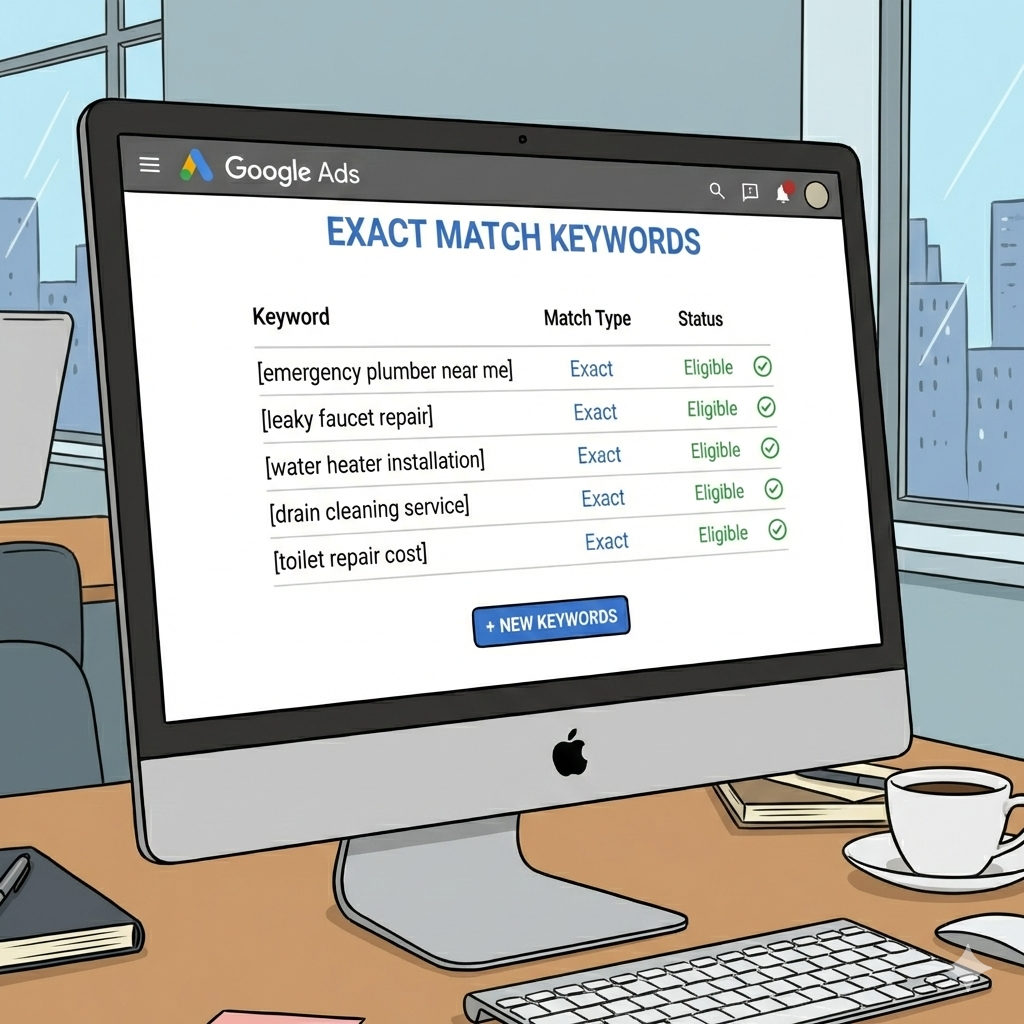
Want to know the top tip to avoid irrelevant search terms? TLDR; Use exact match keywords. If you want the details, read on.
If you run a Google Ads search campaign, you will know that there are three keyword “match types” available. Match types are used by Google Ads to match your ads to specific queries.
The current keyword match types are exact, phrase and broad. You can learn more about keyword match types with the official Google Ads support documentation.
What many advertisers are not aware of is that exact match is really good for keeping the intent and relevance of a search on target. Phrase match and broad match keywords tend to produce the majority of irrelevant search terms. This is where you will end up wasting money.
The top tip to avoid irrelevant and low value terms is to keep your keywords to exact match only. It is just that simple. Exact match is far less likely to produce terms you will need to exclude.
A downside of exact match keywords only is that if you have a larger budget, you may not be able to use it all. Exact match often produces limited interest.
Additionally, exact match keywords are often more expensive, because they are right on target. The more valuable a term is, the more it tends to cost.
If you are a local service business and have a monthly budget of $5,000.00 or less for Google Ads, it is probably a good idea to test using only exact match keywords. You really do not have the budget to waste on irrelevant search terms.
If you are not using all of your budget you can test phrase match and broad match keywords. You will want to keep an eye on your search terms, excluding any low value or irrelevant terms. Exactly what Negative Keyword Lists is for!
In the end, the easiest and most efficient way to avoid poor search terms is to use only exact match keywords only. There will be close variations that will show up and the occasional low value term you will want to exclude, but by and large exact match is going to keep your campaigns targeted to searches that closely reflect the keywords you are using. Essentially, stopping irrelevant search terms before they appear!